A quarter point just erased your margin for error
Why a small rate hike does outsized damage to thin-margin deals, and how to underwrite for it
Investment
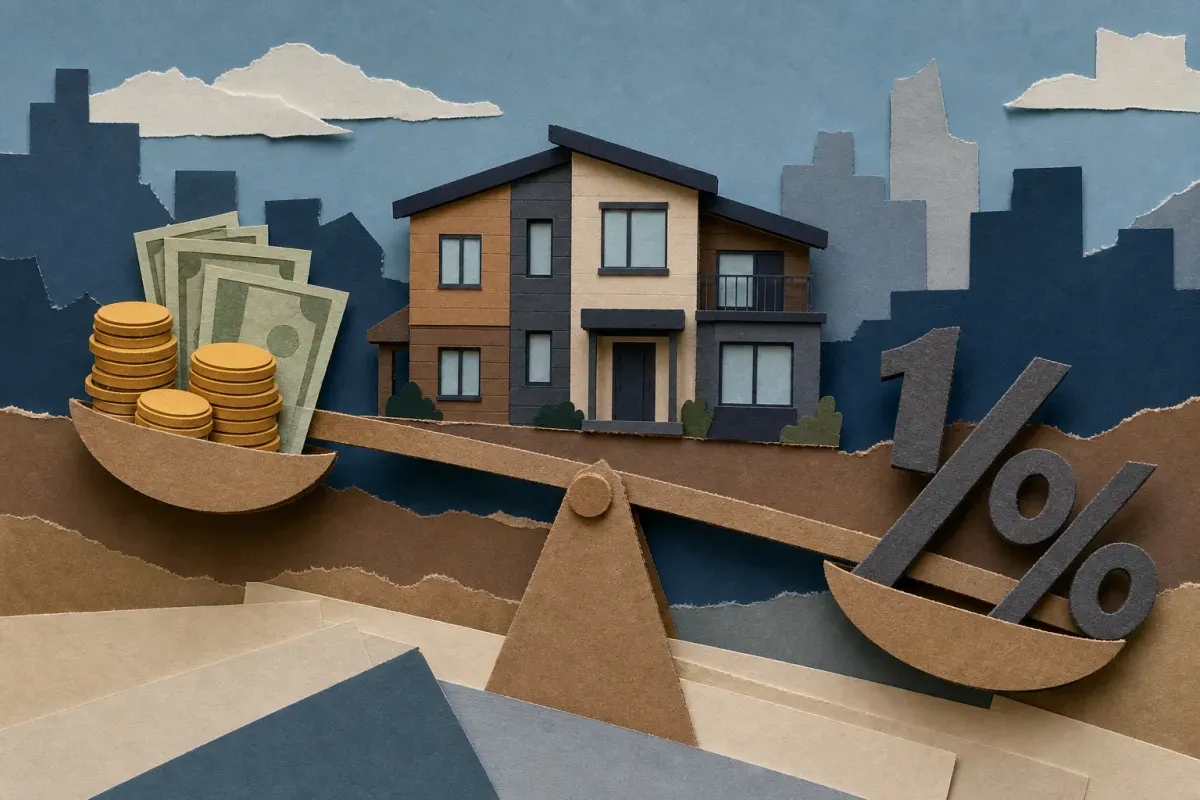
You ran the numbers on a duplex three weeks ago. It penciled out fine at a 7.1% rate, decent cash flow, DSCR just over 1.2. Then the Fed raised rates again yesterday, your lender repriced the loan, and now you're staring at a 1.05 DSCR on the same property with the same rent. Nothing about the building changed. Your margin for error just got smaller.
That's the real story with this hike, and it's not the story most people are telling. It's not about whether rates go up another quarter point next quarter. It's about what happens to deals that were only marginally good to begin with.
Why a quarter point hits harder than it sounds
On a $300,000 loan, a 0.25% rate bump adds roughly $50 a month to your payment at a 30-year amortization. That doesn't sound like much until you realize most rental deals in this market are already running thin cash flow, sometimes $150 to $300 a month after everything.
A $50 hit against a $200 monthly cushion is a 25% cut to your buffer. Do that twice in one year and you've gone from a deal that survives a vacancy month to one that can't.
The investors who get hurt aren't the ones buying at 5% cap rates with cash. It's the leveraged buyers who underwrote a deal assuming rates would hold steady, then got surprised when their lender repriced between accepted offer and closing.
Lenders are repricing faster than your spreadsheet
Here's what a lot of investors miss: your rate lock window is shrinking along with the Fed's patience. Some DSCR lenders are now repricing loans within 24 to 48 hours of a Fed announcement, not waiting for the next data cycle.
If you locked a rate on Monday and the Fed moved Wednesday, your final terms at closing might not match the numbers you underwrote three weeks ago. That's not a hypothetical. It happened to investors closing this week.
The fix isn't panic, it's stress-testing every deal against a rate that's 0.5% to 0.75% higher than your quoted rate before you ever make an offer. If the deal only works at today's rate and falls apart at tomorrow's, it was never a good deal.
The deals that still work look different now
Higher rates don't kill real estate investing, they change which deals clear the bar. Properties with rent upside (below-market leases you can bump at renewal) suddenly matter more than properties with flat, already-maxed rent rolls.
Compare two identical fourplexes at $420,000:
Scenario | Current rent roll | Market rent | DSCR at 7.5% |
|---|---|---|---|
Property A | $3,600/mo | $3,650/mo | 1.04 |
Property B | $3,200/mo | $3,900/mo | 1.09 today, 1.28 in 12 months |
Property A looks fine today and terrible in a year if rates creep further. Property B looks worse today and gets dramatically better once you push rents to market. In a higher-rate environment, that spread between current and achievable rent is worth more than it was a year ago, because it's the only lever you have left to fix a tightening DSCR.
Cash reserves aren't optional anymore
At 6% rates, a three-month vacancy stretch was annoying. At 7.5%, it can flip a property cash-flow negative for the year. The math isn't linear, it compounds because your fixed debt service is a bigger share of your monthly nut.
A few things worth doing differently right now:
- Underwrite every deal with a rate 50 to 75 basis points above your current quote.
- Hold six months of reserves per door instead of three, especially on anything with a DSCR under 1.15.
- Prioritize properties with rent upside over properties that are already at market rent.
- Walk away from anything where the deal only works if rates stay flat or drop.
The investors who get burned this cycle aren't the ones who avoided real estate. They're the ones who kept using pre-hike assumptions on post-hike deals.
This is exactly why the analysis has to be faster than the Fed
Manually re-running DSCR, cash-on-cash, and rent-upside scenarios every time the Fed moves is not something most investors have time for, and honestly it shouldn't be your job. That's the gap Cylier is built to close.
Every report we generate factors in current financing conditions, not last quarter's, so the DSCR and cash flow numbers you see reflect what a deal actually does today, not what it would have done six weeks ago. We flag properties with genuine rent upside separately from ones that are already maxed out, because that distinction matters more with every rate hike, not less.
Higher stakes call for faster, sharper underwriting, not more guesswork. If your last deal analysis is more than a few weeks old, it's already out of date. Get a fresh, pre-underwritten report before you make your next offer, not after.